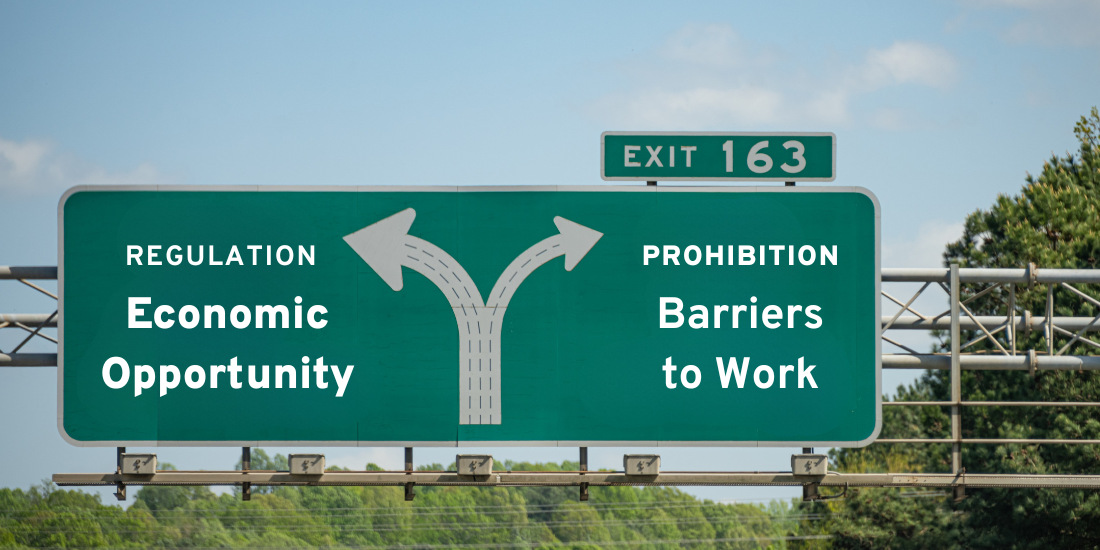
From Barrier to Breakthrough with Autonomous Vehicles
Author:
Lori Becker
Reading time:
4 minutes
Date:
March 31, 2026
Get on Board with Autonomous Vehicles
Autonomous vehicle (AV) legislation is actively moving through the Missouri State Capitol in Jefferson City, creating a pivotal opportunity to expand transportation access for more than 900,000 Missourians with disabilities.
For many of us, this is not hypothetical. This could be the difference between independence and isolation.
Since the inception of rideshare services like Uber and Lyft, I have taken more than 1,900 rides and spent over $75,000 just to maintain a basic level of independence.
As lawmakers consider policies that will shape the future of mobility, this is a critical opportunity to turn a barrier into a breakthrough.
The stakes are not only personal—they are economic. When people with disabilities have reliable access to transportation in Missouri, the impact on our local economy is significant:
- more than 171,000 jobs created
- $16.2 billion in value added to the economy
- $30 billion in total economic output
- $7.8 billion in employee income
(Source: National Disability Institute)

This is what becomes possible when people can get to work, contribute their talents, and participate fully in their communities.
And yet, today, transportation remains the number one barrier to employment for people with disabilities. Not lack of skill. Not lack of ambition. Transportation.
Transportation remains the number one barrier to employment for people with disabilities.
Not lack of skill.
Not lack of ambition.
Transportation.
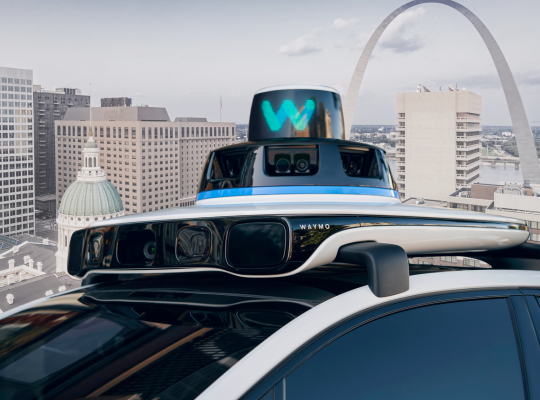
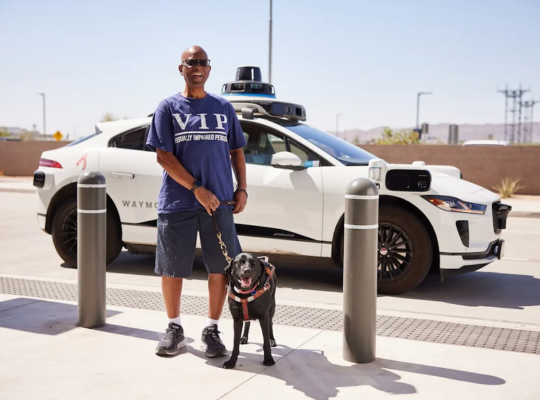
Source: Waymo (edited).
Navigating Everyday Barriers, Every Day.
We are ready to work. We are ready to lead. But too often, we are navigating systems that were not designed with us in mind. Public transit can be unreliable or inaccessible. First- and last-mile gaps make even short commutes difficult. And while rideshare services have improved access, they are not a complete solution.
Many of you know this firsthand.
The uncertainty of whether your ride will arrive on time.
Being dropped off in the wrong location.
Navigating unsafe conditions just to reach your destination.
Managing interactions that can feel uncomfortable or unprofessional—especially when you are heading into an important meeting or moment.
These are not minor inconveniences. They are daily barriers that shape how—and whether—we participate in the world.
Autonomous vehicles have the potential to change that.
They offer something fundamentally different: consistency. A ride that arrives when it is supposed to. A route that is precise. A drop-off that is accurate and safe. An experience that is not dependent on the variability of another person. Most importantly, a system that can be designed with accessibility at its core from the very beginning.
This is about more than technology. It is about dignity. It is about control. It is about the ability to move through the world with confidence.
The Time is Now
I have now traveled to Jefferson City twice to testify in support of this legislation. I went not just to share my own experience, but to represent the broader reality our community faces every day. To make it clear that this is not a niche issue—it is a widespread barrier with real consequences for individuals, families, and our state’s economy.
Missouri has a choice to make.
We can lead in building a future that expands access and opportunity, or we can continue operating within systems that we already know are falling short. We can invest in innovation that includes us, or we can risk being left behind.
For the disability community, this moment matters.
The decisions being made right now will shape whether emerging transportation systems reflect our needs, or overlook them. Whether independence becomes more attainable, or remains out of reach for too many.
We cannot sit this one out. This is the time to pay attention, stay informed, and lend our voices in whatever ways we can. Because this is about our ability to live, work, and participate fully in society.
This is about our future, and it is within reach.